Caregiver & Next-of-Kin Database
Feature Detail
Description
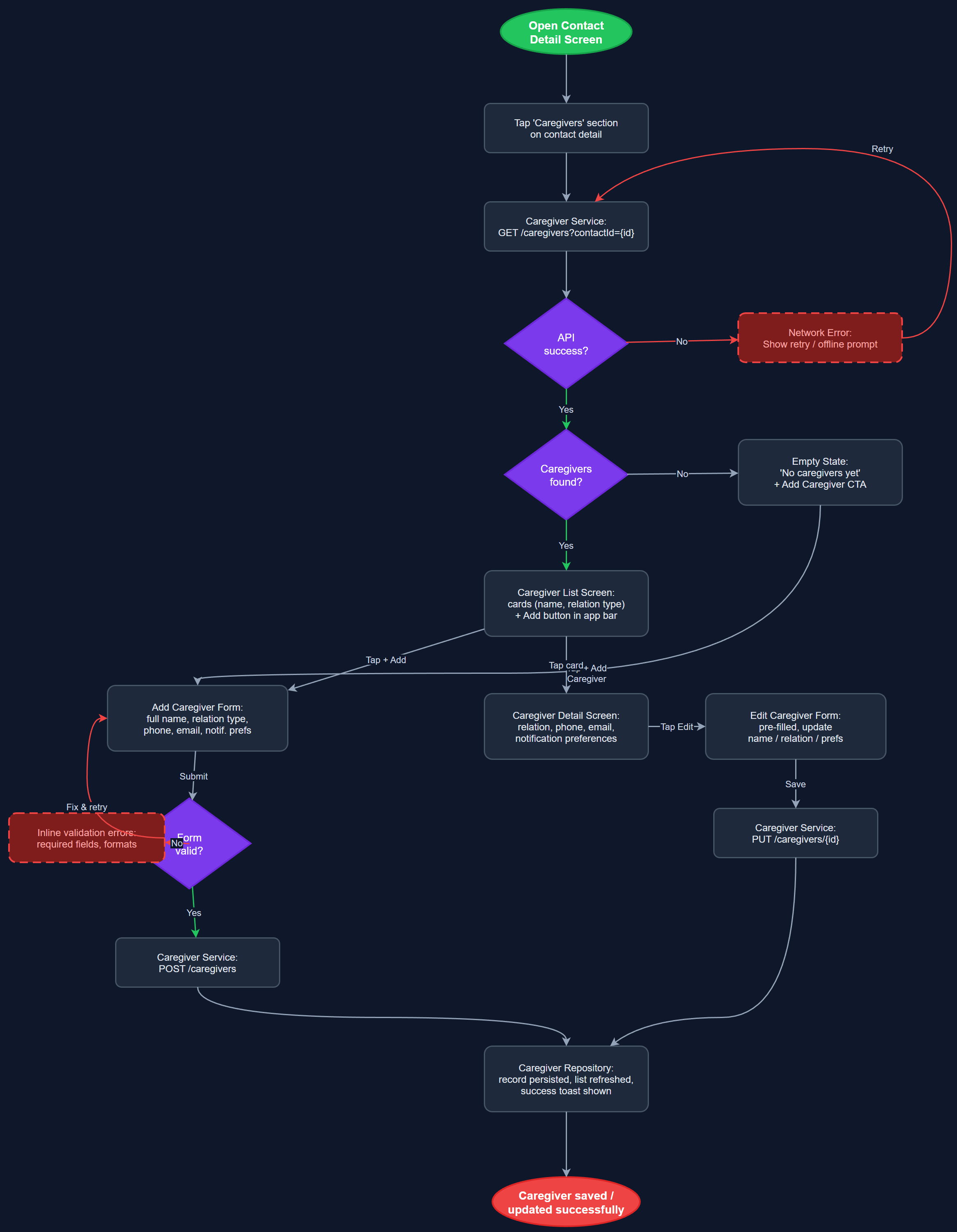
This feature provides a database and management screens for caregivers and next-of-kin associated with contacts. A caregiver list screen shows all caregivers linked to a contact, and a caregiver detail screen displays relationship type, contact information, and notification preferences. The Caregiver Service and Repository handle CRUD operations. This feature is particularly relevant for organizations serving elderly or vulnerable populations where family involvement and emergency contacts are critical for safe and responsible peer mentoring engagements.
User Flow
Analysis
For organizations like Barnekreftforeningen and NHF whose contacts include children, elderly, or people with significant health challenges, caregiver and next-of-kin information is not optional — it is a safeguarding requirement. Peer mentors need quick access to emergency contacts during home visits or events without having to call the coordinator. Storing caregiver relationships digitally also enables the formalized home visit report structure (Blindeforbundet) to include 'caregiver status' as a structured field, improving Bufdir reporting accuracy. This feature directly addresses the 'pårørende database' listed as a Phase 1 NEED in the prioritization matrix, confirming its MVP criticality.
The caregivers table has a foreign key to contacts and stores relationship_type, full_name, phone, email, and notification_consent fields. The CaregiverListScreen is embedded as a section within the ContactDetailScreen rather than a standalone navigation destination, keeping the UX consolidated. The CaregiverDetailScreen handles inline editing via the same ContactFormWidget pattern. API endpoints are `/api/v1/contacts/:contactId/caregivers` (list/create) and `/api/v1/caregivers/:id` (read/update/delete). Data is encrypted at rest using the Secure Storage Infrastructure given the sensitivity of caregiver personal data. The Caregiver Repository uses parameterized queries to prevent SQL injection and validates all inputs at the service layer before persistence.
Dependencies
Definition of Done
Components (63)
Shared Components
These components are reused across multiple features
User Interface (16)
Service Layer (13)
Data Layer (9)
Infrastructure (20)
User Stories
No user stories have been generated for this feature yet.